
AI podcast editing is no longer experimental. The tools work, the time savings are real, and the question B2B production teams are actually asking in 2026 is: which tool for which task, and where does AI stop and human editing begin?
This guide answers those questions directly. No hype about how AI will replace your production team. No fear-mongering about quality loss. Just a practical breakdown of what AI podcast editors do well, what they still get wrong, and how to build a workflow that uses both.
The term "AI podcast editor" covers several distinct functions. Knowing which problem you're solving determines which tool you need:
Filler word removal. AI tools identify and remove "um," "uh," "like," and "you know" from audio automatically. This is the most mature AI editing capability. Accuracy is high, and it saves meaningful time on interview-format shows.
Silence removal. AI removes extended silences between sentences and phrases, tightening pacing without manual scrubbing. Most tools let you configure the minimum silence length to preserve natural speech rhythm.
Transcript-based editing. Tools like Descript let you edit audio by editing transcript text. Delete a line of text, the audio is removed. This allows non-audio-engineers to handle basic editing tasks by working with content they're comfortable with.
Noise reduction. AI-powered noise removal (Adobe's Enhance Speech is a prominent example) cleans background noise, HVAC hum, laptop fan noise, room echo, from recordings. Accuracy has improved dramatically and can rescue recordings that would have been unusable two years ago.
AI-assisted clip identification. Some tools surface high-value moments from an episode and suggest them for clipping. Accuracy varies; the AI is useful for generating options, but editorial judgment still determines what actually ships.
Voice cloning and patch generation. Tools like Descript's Overdub can generate a speaker's voice to patch mispronunciations or recording errors without a re-record session. Useful in specific scenarios; not a primary editing function for most B2B shows.
Descript is the most widely used AI podcast editor among B2B production teams because it handles the most complete set of tasks in a single interface: transcription, transcript-based editing, filler word removal, silence trimming, noise reduction, and export.
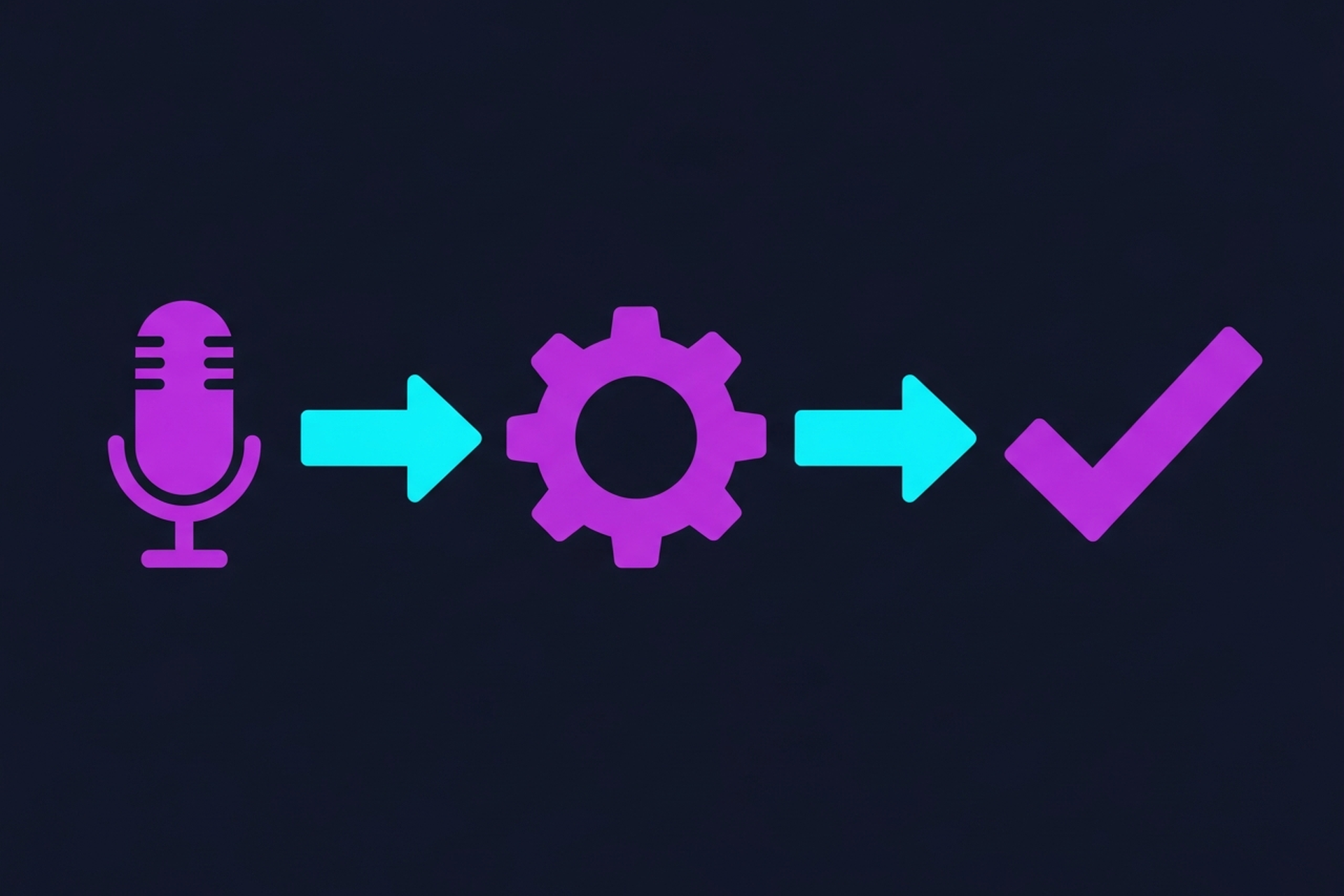
The workflow: upload your audio, Descript transcribes it, you edit the transcript (deleting filler words, trimming sentences, restructuring sections), and the audio matches. Remove filler words in one click across the entire episode. Trim silences automatically. Export a clean audio file, show notes draft, and clip selections from the same session.
Accuracy: Filler word removal accuracy is approximately 90-95%. The AI flags more than it should in some cases. You'll occasionally catch correctly-used "you know" statements getting removed. Quick review before export catches these.
Pricing: Free tier (3 hours transcription/month), then $24/month for creator, $40/month for pro. For regular B2B production, the creator tier handles most needs.
Best for: Teams where editing and content production are handled by the same person, or small production teams that want to reduce tool count.
Auphonic is an AI-powered audio post-processing service, not an editor in the traditional sense. You upload a file; it automatically applies leveling, noise reduction, loudness normalization (to broadcast standards), and format conversion.
For B2B teams where the editing happens elsewhere and the final step is polishing audio before publish, Auphonic handles that step automatically. Upload a rough-edited WAV, receive a publish-ready MP3 that meets podcast platform loudness standards.
Pricing: Free tier of 2 hours per month; paid credits above that. For a weekly 45-minute show, the free tier covers approximately two episodes per month. Credits are inexpensive ($11 for 9 additional hours).
Best for: Teams with existing editing workflows who need automated final-stage audio mastering. Excellent as a finishing tool in combination with other editors.
Adobe Podcast's Enhance Speech tool is one of the best free AI noise removal tools available. Upload audio, receive a cleaned version. No editing interface, no effects chain, just AI noise processing.
For B2B episodes recorded in home offices, conference rooms, or any environment with background noise, running Enhance Speech before your editing pass dramatically reduces the time spent on manual noise reduction.
Pricing: Free via podcast.adobe.com.
Best for: Pre-processing audio before editing. Works in combination with any editing workflow.
Podcastle combines remote recording with AI editing in a single platform. Record remote guests directly in the browser, receive separate local-quality audio tracks for each participant, and apply AI cleanup in the same interface.
For B2B shows with regular remote guests, the local recording quality (compared to recording a Zoom call) combined with AI editing creates a significantly better output with less post-production intervention.
Pricing: Free tier for basic use, paid plans from $23/month.
Best for: Teams that record remote guests frequently and want recording and editing in one place.
Cleanfeed is a professional remote recording platform used by BBC and major podcast networks. It doesn't have AI editing built in, but it captures studio-quality remote audio that requires minimal AI intervention in post. Pair with Audacity, Adobe Audition, or a professional editor for the edit pass.
This isn't an AI-only workflow, but it's worth including because the combination of better source audio plus basic AI cleanup (Auphonic for mastering, Adobe Podcast for noise removal) often produces better results than AI editing applied to mediocre source audio.
Best for: Productions where audio quality is a brand differentiator and getting the source material right matters more than automation speed.
Be honest about the limitations before committing to an AI-first production workflow:
Crosstalk. When two speakers talk simultaneously, AI editors struggle with both transcription accuracy and clean cuts. For shows with natural conversation flow, you'll still need manual edits on crosstalk moments.
Content-aware cuts. AI can identify filler words and silences. It cannot identify when a guest gave a rambling 4-minute answer that should be trimmed to 90 seconds for pacing purposes. Editorial judgment, what should be in the episode, not just what sounds wrong, requires a human.
Tone and pacing. AI silence removal can make a conversation feel rushed. Good editing preserves natural pauses that give listeners time to process ideas. Over-aggressive AI trimming produces technically clean audio that feels uncomfortable to listen to.
Technical B2B content. B2B episodes cover product terminology, industry acronyms, and domain-specific language that AI models sometimes mishandle in transcription, which creates downstream editing errors when using transcript-based tools.
For a broader look at professional production options, see our guide on podcast editing services, which covers both AI-assisted and fully managed production workflows.
Here's the practical workflow most B2B teams land on:
Step 1, Pre-processing: Run raw audio through Adobe Podcast Enhance Speech for noise reduction. This takes 3-5 minutes and improves all downstream AI accuracy.
Step 2, Transcript-based editing: Import the cleaned audio into Descript or your preferred transcript editor. Run one-click filler word removal and silence trimming. Review the flagged removals (spot check, don't re-listen to the whole episode).
Step 3, Content editing: Read the transcript as a content editor, not an audio engineer. Are there sections that run too long? Repetitive points? Guest answers that meander before landing? Make those content-level cuts here, in the transcript, the audio follows.
Step 4, Final mastering: Export and run through Auphonic for loudness normalization and final polish. This ensures the episode meets platform standards without manual gain adjustments.
Step 5, Content repurposing: From the reviewed transcript, build show notes, pull quotes, and clip identifications. This is where the transcript's value multiplies beyond the edited episode.
Total AI-assisted production time for a 45-minute B2B interview episode using this workflow: 2-3 hours, compared to 4-6 hours with fully manual editing.
AI editing is efficient and increasingly capable. It's not always the right answer:
High-stakes content. Executive thought leadership episodes, keynote presentations, or high-profile guest interviews that represent your brand at a significant level deserve human editorial attention.
Complex narrative formats. Documentary-style shows, serialized storytelling, and highly produced branded podcasts require creative editorial judgment that AI tools don't provide.
Consistent quality at scale. If you're publishing multiple episodes per week and quality consistency matters, a professional editor maintains standards that can drift when an in-house team runs AI editing without systematic review processes.
When you don't have time to manage the workflow. AI-assisted editing still requires someone to manage the process, upload, review, export, repurpose. If production management is the bottleneck, done-for-you production is often more effective than adding AI tools to a strained workflow.
For a full breakdown of what professional production includes, see our corporate podcast production services guide. If you're still building the strategic foundation for your show, our podcast content strategy guide covers how to structure a B2B program for long-term ROI. For an honest look at what measuring that ROI looks like, see our B2B podcast measurement guide on benchmarks and attribution frameworks.
AI podcast editors are ready for B2B production workflows. They're not ready to run autonomously without human review. The right model is AI for speed (filler removal, silence trimming, noise reduction, transcript-based editing) and humans for judgment (content editing, pacing, quality control, repurposing strategy).
The teams getting the most value from AI editing aren't replacing their production process with AI. They're using AI to reduce the time it takes to produce quality work so they can focus on the content decisions that matter.
Want production handled end-to-end? Podsicle Media combines AI-assisted production with expert human editing and content repurposing. Schedule a Call to see what done-for-you B2B podcast production looks like.