
Most Android voice recorder reviews are written for people recording reminders or lectures. This one is written for B2B podcast teams, people recording interviews, remote guest tracks, and executive content that will get published.
The requirements are different. You're not saving a voice note. You need clean, uncompressed audio in a format that survives post-production, editing, noise removal, and transcription. The app your phone shipped with probably doesn't cut it.
Here are the seven best free voice recorder apps for Android, reviewed for podcast production use.
Before the comparisons, the criteria that matter for B2B podcast recording:
Lossless or high-quality compressed format. You want WAV or lossless M4A at minimum. Apps that only export in low-bitrate MP3 will compress artifacts into your audio that can't be removed in post. This matters most for transcription accuracy and AI noise removal.
Manual gain control. Auto-gain algorithms can introduce pumping artifacts and inconsistent levels across a recording. For professional use, manual gain control lets you set input levels before recording and lock them there.
Background recording. The app needs to record reliably with the screen off and when other apps are active. Some consumer apps pause or degrade when backgrounded.
File access and export. You need to be able to export the recording to cloud storage or transfer it to a computer without proprietary workarounds. Recordings locked inside an app with no export are useless for production.
Stability on long recordings. A 45-minute interview is a long recording for a mobile app. Consumer apps sometimes crash, skip, or corrupt files on extended recordings. Test before you depend on it.
Easy Voice Recorder (by Digipom) is the most consistently recommended free Android recording app for podcast-quality audio. It records in WAV and M4A formats on the free tier, handles long recordings reliably, and exports cleanly to Google Drive, Dropbox, and local storage.
The interface is clean, pause and resume work correctly, and the app continues recording reliably in the background. For field recording, backup track capture, or solo episode recording, it's the best fully-free option available.
Free tier limitations: The free version records in standard quality modes. High-resolution WAV (PCM) recording requires Easy Voice Recorder Pro ($3.99 one-time purchase). For most podcast use cases, the free WAV quality is sufficient. For archival or professional distribution, the Pro upgrade is worth it.
Best for: General B2B podcast recording, interviews, solo episodes, remote backup tracks.
RecForge II offers more audio format control than any other free Android recorder. Free features include recording in WAV, FLAC, OGG, and multiple MP3 bitrate options. You can adjust sample rate and bit depth manually.
For production teams that have specific format requirements for their editing workflow, a particular bitrate, a specific sample rate, RecForge II provides that control without requiring an upgrade.
Free tier limitations: Some advanced features require a paid upgrade, but the core recording and format control features are genuinely free.
Best for: Technical teams with specific audio format requirements for their editing pipeline.
Dolby On is a free recording app with Dolby's AI audio processing built in. It applies noise reduction, automatic level balancing, and audio enhancement in real time or as a post-processing step after recording.
For B2B recordings in imperfect environments, home offices, co-working spaces, travel, Dolby On's built-in processing can significantly improve recording quality without a separate post-production step. The output isn't studio quality, but it's consistently better than raw mobile recordings in noisy environments.
Format: Records in compressed AAC/M4A. Not ideal for teams that need raw WAV for post-production; better for teams that want a processed, publish-ready recording without desktop editing.
Best for: Recordings where the environment is the main challenge and you want built-in cleanup without a separate editing step.
Smart Recorder is optimized for long-duration recording stability. It's designed specifically to keep recording when the screen is off, when other apps are in use, and for extended periods without corruption or dropout.
For podcast teams recording long interviews on Android, 45+ minutes, Smart Recorder's reliability record is better than most consumer alternatives. The interface is minimal, but the core function (stable long-form recording) is what it's built for.
Format: Supports M4A and PCM WAV on the free tier.
Best for: Long-form interview recording where recording stability is the priority.
Hi-Q records in high-bitrate MP3 (up to 320kbps on the free tier), which is sufficient quality for podcast distribution and keeps file sizes manageable. If your workflow accepts MP3 source files, Hi-Q produces cleaner, more consistent MP3 recordings than most Android stock apps.
Limitation: MP3 is a lossy format. If your editing workflow includes heavy processing, the compression artifacts in a source MP3 can become more apparent after noise removal and EQ. For workflows that need WAV source material, use Easy Voice Recorder or RecForge II instead.
Best for: Teams that record, edit minimally, and distribute, where MP3 source quality is acceptable and file size manageability matters.
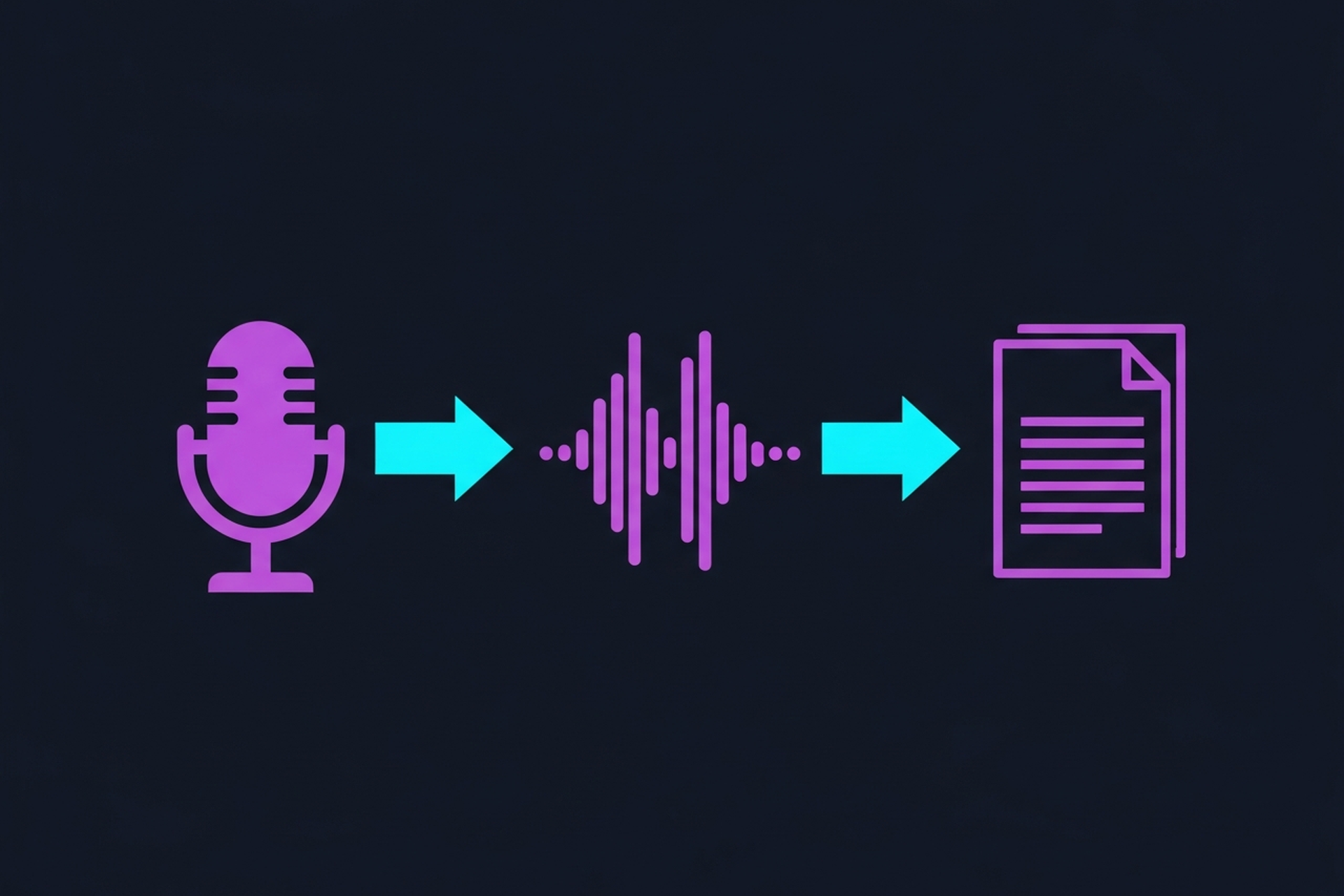
Several Android apps in this category include built-in AI transcription features that generate a text transcript alongside the audio recording. For B2B podcast teams who want a rough transcript immediately after recording, before running through a dedicated transcription tool, these integrated apps reduce the time between recording and content production.
Accuracy varies by app and recording quality, but for capturing the substance of an interview for show notes drafting or repurposing purposes, an immediate rough transcript is genuinely useful.
Best for: Teams that want a fast rough transcript for immediate content use, even if a higher-accuracy tool is used for the final production transcript.
Riverside is primarily a remote recording platform (similar to Zencastr or SquadCast), but its mobile app is worth including here for a specific B2B use case: recording local audio on a mobile device during a remote interview session.
When a guest or host is recording on their phone while the call happens on desktop, the Riverside mobile app captures a local high-quality audio track independently of the call connection. That local track is uploaded to the Riverside session and available for editing, significantly better quality than audio captured over the call itself.
Free tier: Riverside's free plan includes limited recording hours. For regular use, their paid plans start at $15/month.
Best for: Remote interview recording where a participant is on mobile and local audio quality matters.
| App | Best For | Format | Cost |
|---|---|---|---|
| Easy Voice Recorder | General recording | WAV, M4A | Free (Pro $3.99) |
| RecForge II | Format control | WAV, FLAC, MP3, OGG | Free (some features paid) |
| Dolby On | AI in-recording enhancement | AAC/M4A | Free |
| Smart Recorder | Long-duration stability | WAV, M4A | Free |
| Hi-Q MP3 Voice Recorder | High-bitrate MP3 | MP3 | Free (limited) |
| Voice Recorder + Transcript | Immediate rough transcript | Varies | Free/Freemium |
| Riverside Mobile | Remote guest local audio | WAV | Free tier / $15+ |
The best app can't fix poor recording technique. These basics apply regardless of which app you use:
Get the phone close to your mouth. 6-8 inches is the sweet spot for most mobile microphones. Too far and you capture more room noise than voice; too close and you risk plosives ("p" and "b" sounds distorting).
Record in the smallest, softest room available. Hard surfaces (tile, glass, concrete) cause reflections that degrade audio quality. Carpeted rooms, rooms with soft furniture, and closets produce better results than open offices or conference rooms.
Disable phone notifications before recording. Notification sounds, incoming calls, and vibrations corrupt recordings and interrupt takes. Enable Do Not Disturb before every session.
Do a 30-second test recording before the real take. Play it back with headphones to check for background noise, level issues, and distortion before committing to a full recording session.
Transfer files immediately after recording. Mobile storage is not an archive. Export to cloud storage or email the file to yourself before you forget or the file gets overwritten.
For a broader look at the content workflow after you've captured clean audio, see our guide on podcast clipping tools. Turning recorded audio into social content is where distribution starts. If you're building out your full B2B podcast strategy, our podcast content strategy guide covers how to structure your show for compounding content value. And if you need a companion app comparison across all platforms, see our best app for voice recording guide for iPhone, Android, and desktop options side by side.
For free Android voice recording, Easy Voice Recorder is the default recommendation for most B2B podcast teams. It's reliable, formats are podcast-appropriate, and it handles long interviews without issues.
If you need AI cleanup built in, add Dolby On. If your workflow requires specific formats, use RecForge II. If you're recording a remote guest's local track, Riverside mobile handles that cleanly.
The app is the easy part. The workflow, how you get from mobile recording to edited, distributed, repurposed episode, is where most teams underinvest.
Need the full production workflow handled? Podsicle Media takes B2B podcasts from recording to distributed and repurposed content. Get Your Free Podcasting Plan to see what end-to-end production looks like.