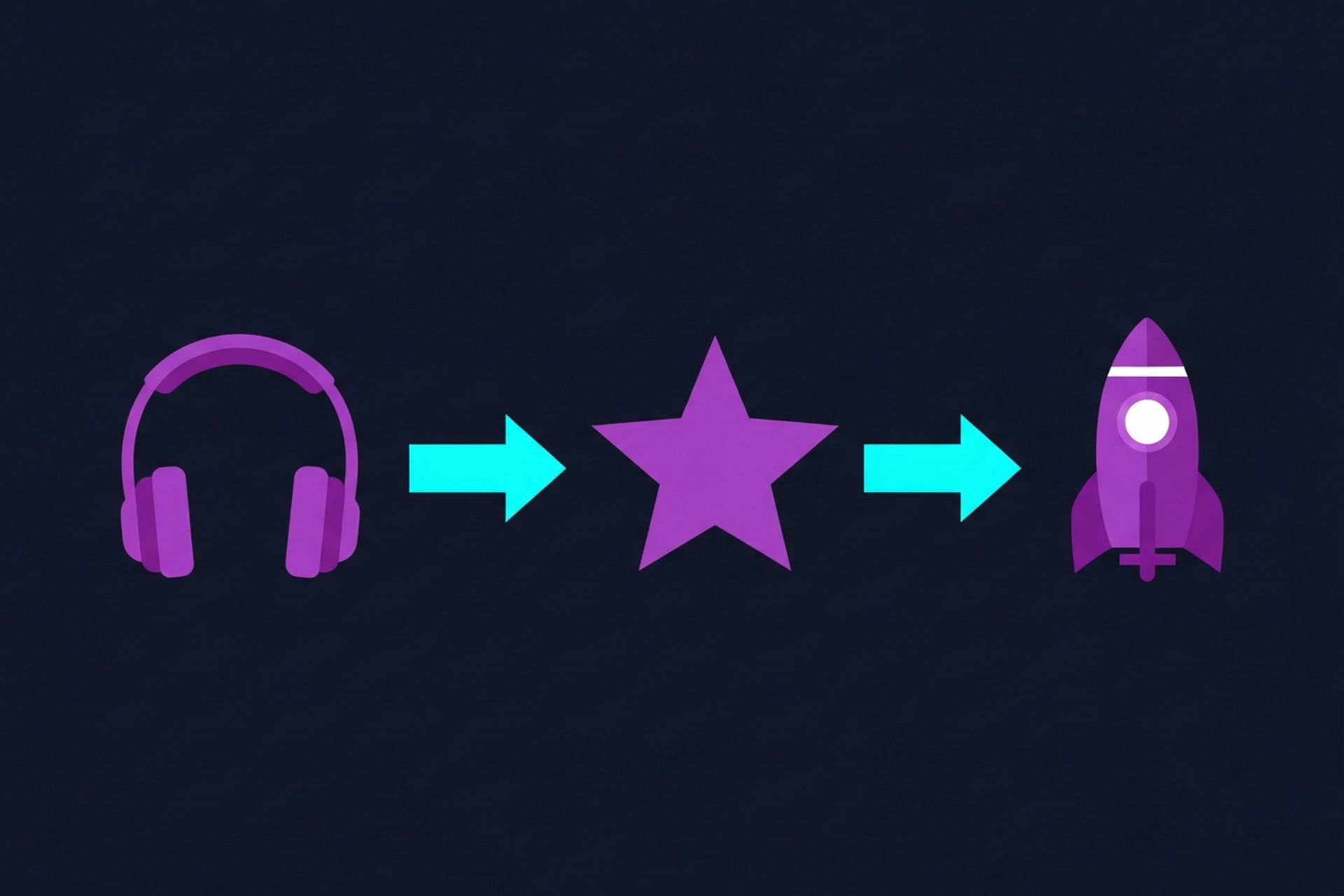
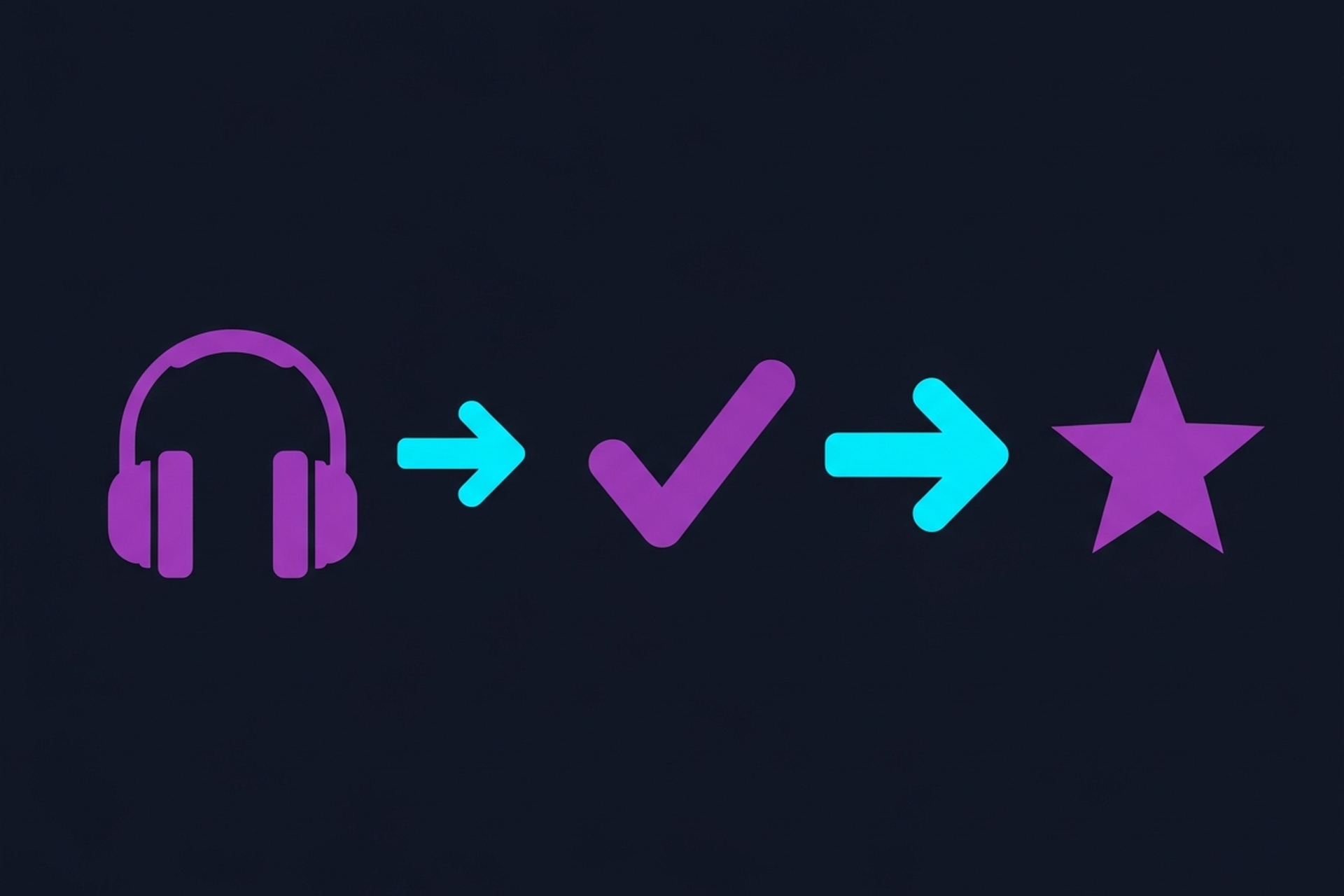
"Record and reverse" comes up in audio production contexts for multiple reasons. For consumer musicians, it's a creative effect. For B2B podcast teams, the phrase often surfaces in the context of workflow design and content repurposing rather than audio effects.
This guide covers both the technical meaning and the strategic application of reverse audio for B2B content teams. More importantly, it covers why most B2B teams asking about "record and reverse" are usually trying to solve a different problem than they realize.
In audio production, recording and reversing audio means capturing a sound and then playing it backward. The reversed audio plays from the end of the clip to the beginning.
This technique creates distinctive sound textures. Reversed speech or music has a characteristic "whoosh" or dreamlike quality. In music production and film, it's used for creative effect. In broadcast and professional audio, it occasionally appears in intro stings, transitions, or branded sound design elements.
Most major audio tools support audio reversal: GarageBand, Logic Pro X, Adobe Audition, Audacity, and Reaper all include the function. It's a basic destructive or non-destructive edit depending on the platform.
For B2B podcast production, reverse audio as an effect is rarely the goal. More often, teams searching for "record and reverse" are looking for something specific to their repurposing workflow.
When B2B content teams describe wanting to "record and reverse" their workflow, they're often describing a smarter approach to content production: record the podcast episode first, then work backward to create all derivative content from that source.
This is actually the right model for B2B podcast programs.
The traditional approach is to plan and write content in separate formats: a blog post here, a social caption there, an email newsletter separate from everything else. Each format starts from scratch.
The better approach starts with a recorded interview or episode, then uses that raw material as the source for every other format. Transcription, show notes, blog repurposing, audiograms, short clips, social quotes, and newsletter content all derive from one recording session.
That's a record-and-reverse content workflow: record once, then systematically work through your distribution formats.
B2B marketing teams are perpetually short on production capacity. The "record and reverse" model addresses the core problem directly: it maximizes the return on each recording session.
A single 45-minute interview with an executive, customer, or subject-matter expert contains enough material to fuel weeks of content across formats. But only if you have a system to extract it.
Without that system, teams record an episode, publish the audio, write show notes manually, and stop. The blog content doesn't get written. The social quotes don't get pulled. The audiogram clips never get made. The full content value of the episode goes unrealized.
Teams that treat the recording as a content source rather than just an audio file get dramatically more from the same production effort. That's the strategic application of a "record and reverse" mindset in B2B podcasting.
Executing a record-and-reverse content workflow requires the right toolkit at each stage.
Transcription comes first. Before you can repurpose a recording, you need an accurate written version of it. This is where professional podcast transcription pays off. A clean transcript with speaker labels is the foundation for every downstream content format.
Content extraction. From a clean transcript, you can identify the best quotes, the most actionable insights, and the strongest narrative threads. These become the raw material for blog posts, LinkedIn posts, and email content.
Clip and audiogram creation. Short audio clips pulled from the episode with branded visual frames become platform-ready social assets. The best moments from a 45-minute interview can generate five to eight clips that each stand alone.
Show notes and SEO. A structured summary of the episode, built from the transcript, serves double duty as show notes in your podcast player and SEO content on your website.
Each step builds on the previous one. The transcript feeds the blog post draft. The blog post draft informs the email newsletter. The audiogram clips preview the episode on social. It's a compounding system.
On the technical side, there are legitimate B2B production applications for reversed audio effects, even if they're not the core focus.
Show intro sound design. Some branded podcast producers use reversed audio as part of their intro sound package. A reversed string swell or a reversed voice sample creates a distinctive brand signature.
Episode transition stings. Short reversed audio elements can mark transitions between segments without feeling like stock royalty-free music.
Teaser clips. A reversed snippet of a compelling clip used in social promotion creates curiosity without giving away the full content.
These are production-level decisions best made with a dedicated sound designer or post-production team. For most B2B teams outsourcing production, this is handled as part of the full editing and post-production workflow.
When a B2B marketing team starts asking about audio production techniques, it's usually a signal that they're deep in the details of a production problem they shouldn't be solving themselves.
The record-and-reverse content model, whether that means reversed audio effects or a reverse-engineer-from-recording repurposing strategy, works best when there's a production system behind it. Not a marketing director researching audio tools between campaign reviews.
The teams that get the most from their podcast investment are the ones that focus on recording quality conversations and then hand the production and repurposing work to a team that does it every day.
For an example of what full-stack podcast repurposing looks like in a B2B context, the complete guide to podcast transcription services covers how transcription fits into a broader content production workflow.
Not capturing clean source audio. You can't reverse-engineer quality content from a bad recording. The source audio quality determines the ceiling for every derivative format. If the original recording is muddy, off-mic, or corrupted by background noise, no editing or repurposing system will rescue it.
Skipping the transcript step. Teams that try to repurpose audio directly, without a text-based transcript, create extra manual work at every step. The transcript is the fastest path to every other format.
Treating repurposing as an afterthought. The most effective B2B podcast teams plan the repurposing deliverables before the recording happens. They know what clips they need, what blog angles fit their content calendar, and what quotes will resonate with their audience. That planning happens before the record button gets pressed.
Under-utilizing clips. A well-executed B2B podcast episode should generate at least five to ten short clips. Most teams pull one or two, if any. The ones that commit to clip production consistently report that clips drive more new listeners than any other distribution tactic.
The simplest version of a B2B podcast repurposing system looks like this: record the episode, get a clean transcript, build show notes and a blog post from the transcript, pull five clips for social, and write an email that teases the episode and drives to the full recording.
That's it. The entire workflow derives from one source. The recording is the center of gravity, and everything else orbits it.
If that system sounds like more production work than your team currently has capacity for, talk to the Podsicle Media team about how we handle end-to-end production and repurposing. The recording is your job. The rest of it can be ours.