
Most B2B companies record a podcast episode, publish it, share a link once on LinkedIn, and move on. That is about 5% of the value extracted from a one-hour conversation.
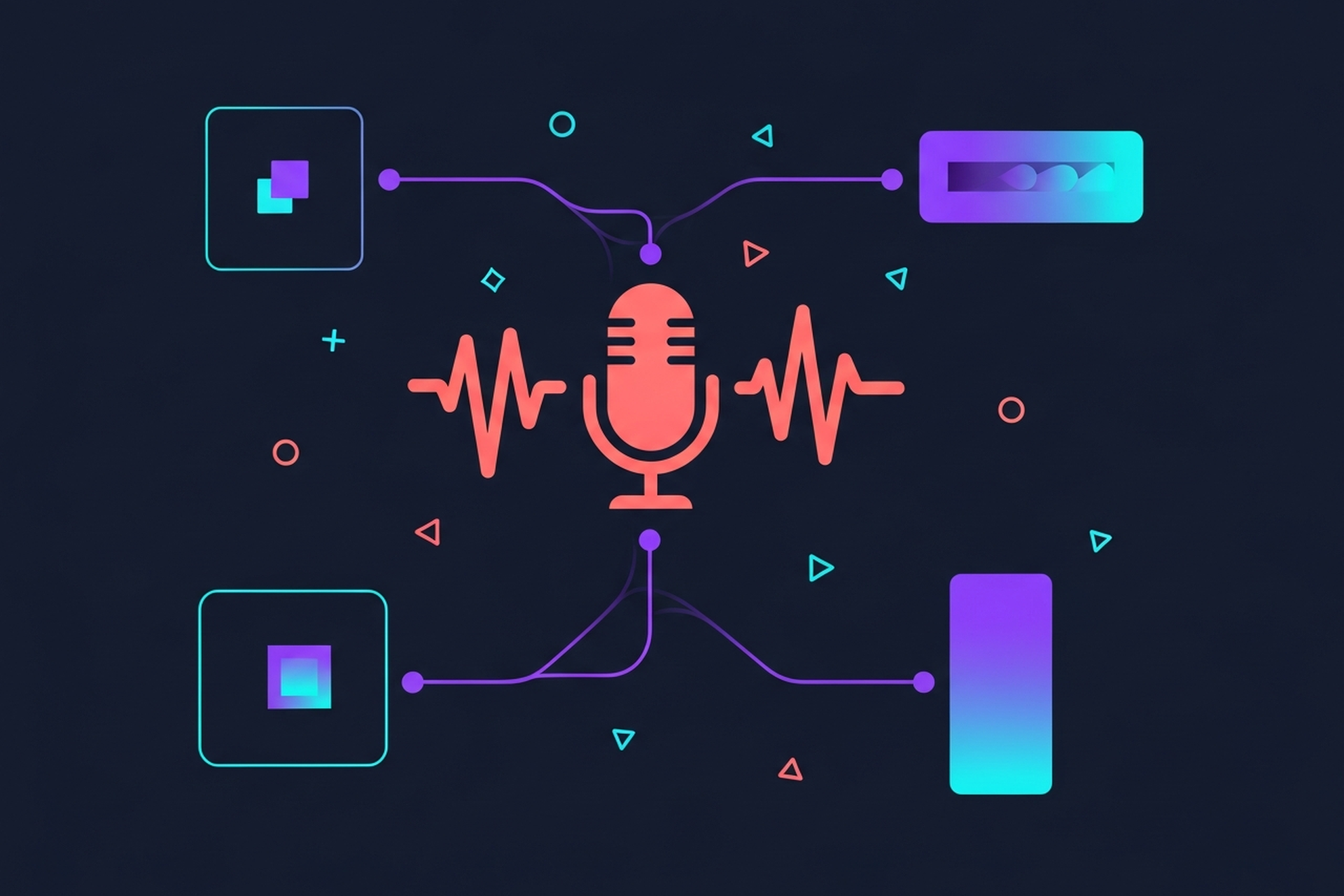
The companies getting real ROI from podcasting treat each episode as a content system, not a single asset. One 45-minute interview can produce two weeks of LinkedIn content, a newsletter section, a YouTube clip, a blog post, and a sales enablement asset. The mechanics of doing this efficiently are what separates teams that scale their podcast from teams that quietly stop publishing six months in.
This guide covers the practical workflow for repurposing podcast content for social media: what to extract, how to format it for each platform, and what tools handle the heavy lifting.
The business case is straightforward. Podcast listenership is growing, but podcast discovery still happens primarily through social media and word of mouth. If your episode is only reachable via a podcast app, you are missing most of your potential audience.
More importantly, your ideal B2B buyers do not necessarily listen to podcasts. They scroll LinkedIn during commutes. They watch short video clips at 1.5x speed. They read newsletters. Repurposing puts your ideas in front of people who will never open a podcast player.
There is also a compounding effect. A 20-episode archive, properly repurposed, becomes a steady stream of content that keeps your brand visible between new episode releases. Teams that build this system early end up with a significant content moat that competitors cannot replicate overnight.
Before choosing tools, it helps to know what you are looking for. Every podcast episode contains several distinct content types:
Quotable moments. Short, sharp statements that stand alone without context. These become pull quotes for LinkedIn, Twitter/X, or audiograms.
Tactical segments. A guest explains a specific process, framework, or approach. These translate directly into listicle-style LinkedIn posts or short-form video clips.
Data points and statistics. Any number, research finding, or benchmark mentioned in the episode. These work well as standalone graphics or LinkedIn carousel posts.
Contrarian positions. When a guest pushes back on conventional wisdom or takes an unexpected stance. These generate engagement because they invite response.
Story beats. Personal or company stories with a clear beginning, challenge, and outcome. LinkedIn's algorithm rewards narrative posts, and these provide the raw material.
The fastest repurposers do this extraction during transcription review, not as a separate step. Read the transcript once, flag the moments, then batch-create the assets.
LinkedIn is the primary distribution channel for B2B podcast content. The formats that consistently perform:
Text posts with a hook. Pull the sharpest quote or most provocative claim from the episode. Write a 3-5 sentence setup, drop the quote, and follow with 2-3 bullet points of context. End with a question or a clear point of view. No fluff, no "excited to share."
Native video clips. Short clips (60-90 seconds) uploaded directly to LinkedIn outperform external links in the algorithm. The clip should be self-contained: someone who has never heard your podcast should be able to follow it without context.
Carousel posts. Take a tactical segment from the episode and break it into 5-8 slides. Slide one is the hook, slides two through seven are the framework or steps, slide eight is the summary. LinkedIn carousels consistently outperform static images in reach.
Episode summaries. A structured post that covers the three main takeaways from the episode. This works for audiences who want the value without committing to listening.
YouTube Shorts (under 60 seconds) are worth adding to your workflow if you have video of the recording. The algorithm surfaces Shorts to non-subscribers, which drives discovery. Clip the most self-contained, engaging 30-60 second moment from the episode, add captions, and publish.
Short clips and text snippets work here, but distribution reach is lower for B2B audiences than LinkedIn. Worth doing if your audience is active there, but prioritize LinkedIn first.
A well-formatted episode summary is the highest-value newsletter content you can produce. It requires the least additional effort (the content already exists) and delivers real value to subscribers who did not listen. Format it as a brief overview, three key points with attribution, and a listen link.
The workflow that scales looks like this:
Step 1: Transcription. Transcribe every episode immediately after recording. Do not wait until publish day. Transcription turnaround is fast with current AI tools, and having the transcript unlocks every subsequent step.
Step 2: Extraction pass. Read the transcript and flag moments that match the content types above. Use a simple notation system: Q (quote), T (tactical), D (data), S (story), P (provocative). This takes 15-20 minutes per episode and is the highest-leverage step in the workflow.
Step 3: Clip creation. Use the timestamps from your flagged moments to create video clips and audiograms. Tools like Descript, Opus Clip, or Capsho automate much of this process.
Step 4: Text post drafting. Write LinkedIn posts from your flagged moments. Aim to draft 5-7 posts per episode during a single 45-minute writing session.
Step 5: Scheduling. Load the posts into a scheduler. For a weekly podcast, a 10-day distribution window (3-4 LinkedIn posts, 1-2 email newsletter sections, 2-3 short video clips) keeps content flowing between episode releases.
Several tools exist specifically for repurposing podcast content:
Descript: Transcript-based editing with built-in clip creation and audiogram tools. Works well for teams where the same person edits and repurposes.
Opus Clip: AI-powered video clipping that identifies the most engaging moments and generates clips automatically. Strong for teams producing video podcasts.
Capsho: Focuses specifically on B2B podcast repurposing. Generates LinkedIn posts, email content, and show notes from your transcript. Less editing required compared to generic AI writing tools.
Repurpose.io: Automates multi-platform distribution of audio and video clips. Strong for high-volume teams that want to minimize manual publishing steps.
Canva: Template-based graphics creation for quote cards, carousel posts, and episode artwork. Most teams already have it; it is worth using a consistent podcast template rather than designing ad hoc.
No single tool replaces the extraction and drafting steps. The best AI tools generate starting points, not final content. Plan on a human editorial pass for everything that goes out under your brand's name.
Over-engineering the workflow. Teams spend weeks evaluating tools and building elaborate systems before publishing a single piece of repurposed content. Start with a transcript, a LinkedIn draft, and a clip. Build the system from actual constraints, not anticipated ones.
Repurposing everything equally. Not every episode has five quotable moments. Some episodes are better suited to a single deep-dive LinkedIn post than a full repurposing run. Learn to read which episodes have the highest content yield.
Losing the brand voice. AI tools generate text that is grammatically correct but tonally flat. If your company has a specific voice and perspective, you need a human editor to sharpen the AI output before publishing.
No distribution calendar. Repurposed content that sits in a drafts folder delivers zero value. A simple publishing calendar, even a spreadsheet, forces accountability.
Repurposing is a distribution decision, but it depends entirely on editorial decisions made before recording. If episodes lack a clear central argument, tight structure, or memorable moments, there is nothing to extract.
A strong podcast content strategy solves this upstream. When you plan episodes around specific claims and tactical value, repurposing becomes straightforward because the raw material is structured for it.
For B2B teams that want podcast repurposing without the internal overhead: the production workflow includes transcription, episode editing, show notes, and a structured set of social assets delivered with each episode.
The alternative is building the workflow in-house, which works if you have a dedicated content team. For most B2B marketing teams that are already stretched, the time investment in tools, training, and coordination often exceeds the cost of outsourcing production entirely.
Podsicle Media handles end-to-end podcast production for B2B companies, including repurposed social assets delivered with every episode. You record; we handle everything else.
Talk to us about what a managed podcast workflow looks like for your team.