Starting a podcast 101 sounds simple until you actually try to do it. There are a hundred decisions sitting between "we should launch a show" and your first episode going live on Spotify. Most B2B teams either never start, or they overthink every step and stall out.
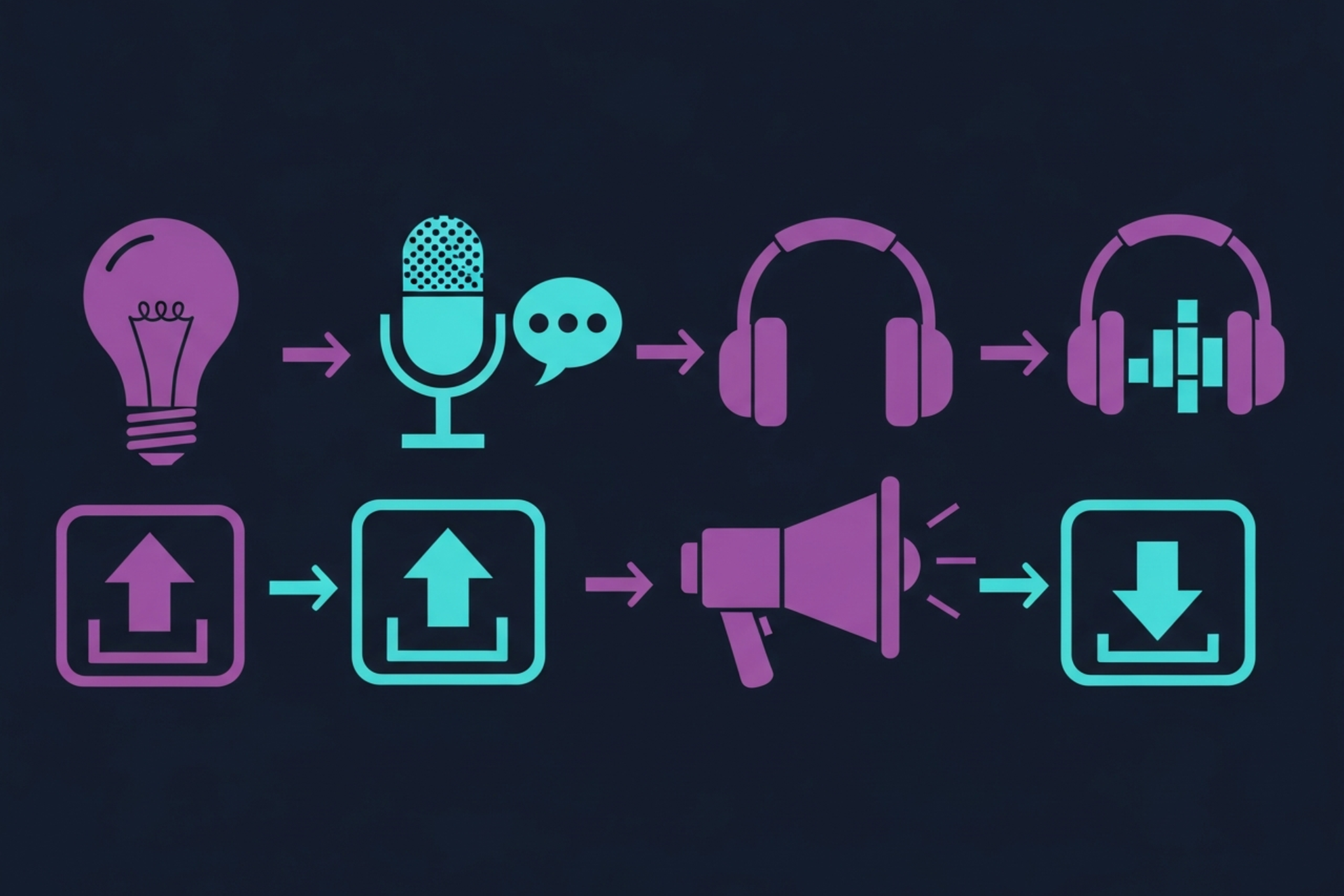
This guide cuts through the noise. You will walk away with a clear sequence: define your show concept, nail your ICP, pick a format, grab the right gear, record a pilot, choose your host, submit to directories, and build a promotion plan. That is it. No fluff. No endless rabbit holes.
Let's get moving.
The biggest mistake B2B teams make is launching a podcast because it sounds like a good idea, not because they have a clear answer to who it is for and why it exists.
Your show concept needs two things before anything else.
What is the show about? One tight topic area. Not "business" or "marketing." Something specific like "demand gen for Series B SaaS companies" or "how manufacturing brands are modernizing their go-to-market." Tight beats broad every time.
Who is your ICP? Your ideal customer profile is your target listener. Get specific. Not "marketing leaders" but "VP of Marketing at a B2B software company with 50 to 250 employees, focused on pipeline growth, consuming content on commutes." The sharper your listener definition, the easier every future decision becomes, from topics to guest selection to which platforms to prioritize.
Write both down. If you cannot state both in two sentences, the concept is not ready yet.
Format is a strategic decision, not a creative one. The right format is the one you can produce consistently with the team and budget you actually have.
Four formats work well for B2B shows:
Interview-based: You bring on one guest per episode. Easiest to produce, builds your network, and every guest becomes a distribution node when they share the episode. Best for shows where you want to feature your ICP as guests (a pipeline-building move) or establish credibility in your space.
Solo commentary: One host, no guest, sharing a point of view on a topic. Fastest to produce. Great for founders or senior practitioners who have strong opinions and a built-in audience to seed early growth.
Panel or roundtable: Two or three guests discussing a theme. High-energy, but harder to schedule and produce well. Worth it if you have an existing community to pull from.
Narrative or documentary: The most differentiated format. You tell a story across an episode or season arc. Highest production investment, highest potential for virality. Best used by teams with dedicated content resources.
Match the format to your reality, not your ambition. A solid interview show you publish every two weeks beats a narrative show you abandon after episode four.
For a deeper look at format tradeoffs and launch sequencing, our guide on launching a company podcast breaks down the full decision framework.
Gear is not your competitive advantage. Content is. That said, you do need audio that does not make listeners cringe.
Here is the minimum viable podcast setup for a B2B show:
Microphone: A USB condenser mic handles 90% of B2B recording situations. The Shure MV7 (around $249) and Rode NT-USB Mini (around $99) are both excellent. If you have two in-person co-hosts regularly, budget for an audio interface and XLR mics. If you are recording solo or remote, USB is fine.
Headphones: Closed-back headphones prevent echo and bleed. Any pair in the $50 to $100 range works. The Sony MDR-7506 is a studio standard at under $100.
Recording software: If you are recording remotely with guests, use Riverside.fm or Squadcast. Both record local audio tracks from each participant, so a guest's bad internet connection does not wreck your audio. For editing, Descript lets you edit audio like a document, which is a game-changer for non-technical teams.
Acoustic environment: You do not need a treated studio. A small room with soft surfaces (carpet, couch, curtains) kills echo. Many B2B teams record in a closet full of clothes and sound great.
Want the full breakdown with pricing tiers? Check out our guide on how to start a podcast on a budget before buying anything.
Do not wait until everything is perfect to hit record. Record a pilot before your official launch for three reasons.
First, it tests your setup. You will discover acoustic issues, mic placement problems, or software gaps that you cannot see coming until you hear a real recording.
Second, it gives you a real piece of content to evaluate. Is the format working? Is the host energy right? Is the topic focused enough?
Third, it is not going live. There is no pressure. This is your practice run.
For your pilot, pick a topic you know cold so you are not fighting both nerves and research simultaneously. Keep it to 20 to 30 minutes. Listen back with fresh ears 24 hours later and note anything that needs adjusting before you record your real launch episodes.
Aim to record at least three episodes before launch. Three episodes gives new listeners somewhere to go, signals that the show is real, and gives your team confidence that the production system actually works.
For B2B shows, the host is often underestimated as a strategic decision. The host is the show's voice, personality, and credibility signal.
Three common choices:
Internal team member: A founder, CMO, or senior practitioner who has genuine authority on the topic. The credibility is built in. The risk is bandwidth, since they need to show up consistently.
Dedicated content host: A journalist-style host who is skilled at interviewing but is not the company's subject matter expert. They ask better questions, keep guests on track, and are often more consistent. Works well for shows where guest expertise is the draw.
Customer or community voice: In some cases, featuring customers as rotating co-hosts builds community and strengthens relationships at the same time. Less common but effective for community-led B2B brands.
Pick whoever will actually show up, do the prep, and stay enthusiastic past episode 20. Consistency beats charisma.
Once you have your first three episodes and a trailer ready, it is time to distribute. This is where a lot of teams get stuck thinking it is complicated. It is not.
Here is your standard distribution list:
Apple Podcasts: Still the largest podcast platform by listener time. Submit via Apple Podcasts Connect. Approval typically takes 24 to 48 hours.
Spotify: Submit via Spotify for Podcasters (now Spotify's creator hub). Usually live within a few hours.
Amazon Music / Audible: Increasingly important, especially for professional audiences who use Alexa devices.
YouTube: If you recorded video, upload full episodes and short clips. YouTube is becoming a major podcast discovery platform and its search reach is significant for B2B keywords.
Most hosting platforms (Transistor, Buzzsprout, Captivate) will auto-distribute to multiple directories via your RSS feed, which simplifies the submission process considerably. For a full comparison of where your audience actually listens, see our breakdown of top podcast platforms for B2B shows.

Publishing the podcast is not the launch. The launch is everything that happens around the publish.
A promotion plan for a B2B podcast does not need to be complicated. It needs to be consistent.
Before launch: Announce to your email list, mention the upcoming show in sales calls, post about it on LinkedIn, and get your planned guests or early listeners to subscribe before episode one drops.
At launch: Every guest shares their episode. Internal team members post about it. Your newsletter runs a feature. Sales reps drop the episode link into active deal conversations where the topic is relevant.
Ongoing: Turn every episode into at minimum three to five LinkedIn clips, one newsletter section, and one blog post. This multiplier effect is where B2B podcasts create actual pipeline value. A 40-minute episode should generate two to three weeks of supporting content.
Channel prioritization: For B2B shows, LinkedIn is your primary organic distribution channel. Your email list is your owned distribution. Podcast directories are your discoverability layer. All three working together beat any one in isolation.
Review your starting a podcast checklist before your launch week to make sure all three channels are activated from day one.
If this guide gave you confidence that you know what to do, run with it.
If it also made you realize that doing all of this well while running a marketing team is a lot, that is where Podsicle Media comes in. We handle the full production stack for B2B teams: strategy, recording, editing, show notes, distribution, and repurposing. You show up for the recording. We handle everything else.
Most B2B teams that come to us have been sitting on a podcast idea for six to twelve months. They know it is the right move. They just cannot afford to spend weeks getting the mechanics right when there is a pipeline to hit.
Podsicle Media is the fast track. Same quality. Fraction of the internal time.
See how Podsicle Media works and get your show moving this quarter.