
AI transcription has moved from novelty to standard infrastructure for B2B podcast teams. The tools that transcribe audio to text have improved enough that most teams can get a usable transcript in minutes rather than hours, and the cost has dropped to a level where it is a line item rather than a budget decision.
But "AI transcription" covers a wide range of tools with meaningfully different accuracy, speed, feature sets, and workflow integrations. Choosing the right tool depends on what you need the transcript to do: feed an editing workflow, generate show notes, create searchable content, produce captions, or all of the above. This guide compares the leading AI transcription options, explains what to look for, and connects transcription to the broader repurposing workflow.
AI transcription and human transcription produce similar outputs but through different processes with different tradeoffs.
AI transcription uses speech recognition models trained on large audio datasets. It processes audio faster than real time, typically generating a transcript of an hour-long recording in 5 to 15 minutes. Accuracy varies by tool, audio quality, speaker accent, and vocabulary. Modern AI transcription is accurate enough for most B2B podcast workflows when audio quality is good, but it consistently produces errors on technical terminology, product names, and heavy accents.
Human transcription uses trained transcribers who listen and type. It is slower, typically delivered within hours to a day, and more expensive, usually per audio minute. Accuracy is higher, especially for complex vocabulary and multiple speakers. For client-facing content, compliance-sensitive material, or high-stakes publication, human transcription is worth the cost difference.
Most B2B podcast teams use AI transcription as the default and human review as the quality layer, either in-house or through a managed production workflow.
Descript is the most integrated AI transcription tool in podcasting. It transcribes audio as part of an editing workflow: you record or import audio, the transcript generates automatically, and you edit both the audio and the text in the same interface. For teams that want transcription tightly coupled to editing, Descript reduces friction across both steps. It handles speaker identification, exports to multiple formats, and feeds downstream into show notes and clip identification.
Otter.ai is widely used for meeting and interview transcription. It handles speaker identification, produces clean paragraph breaks, and integrates with Zoom for automatic meeting transcription. The AI summary and action item features are useful for internal meetings but less relevant for podcast transcription. For podcast use, the free tier is useful for lower-volume teams; paid tiers remove minute caps and add more advanced features.
Riverside builds transcription into its remote recording platform. When guests and hosts record on Riverside, the transcript is generated from the local recordings, which are higher quality than typical video call audio. The resulting transcript accuracy is generally better than tools processing compressed audio from Zoom or Teams. For teams already using Riverside to record, this eliminates a separate transcription step.
AssemblyAI is an API-first transcription service used by developers and teams building custom workflows. Accuracy is strong, and it supports multiple languages, speaker diarization, and sentiment analysis. Not a polished consumer product, but the right choice for teams integrating transcription into a custom content pipeline.
Whisper (OpenAI) is an open-source transcription model with high accuracy and no usage-based cost. It runs locally or through the API. Consumer-friendly interfaces built on Whisper make it accessible without command-line knowledge. For teams prioritizing accuracy and cost efficiency with some technical tolerance, Whisper is a strong option.
Grain focuses on meeting intelligence and short-form clip creation from recorded calls. It transcribes Zoom and Google Meet recordings automatically, identifies highlights, and lets you share clips directly. More useful for sales and customer success teams than for podcast production, but relevant if your podcast format overlaps with recorded customer conversations.
AI transcription tools often advertise accuracy rates in the 90 to 95 percent range. In practice, that means one to five errors per hundred words. On a 45-minute interview with approximately 6,000 words, that is 60 to 300 errors before manual review.
The practical impact depends on where errors occur:
The right practice is to treat AI transcription output as a first draft that requires a review pass, not a finished product. Budget time for review, especially for content being published externally.
Most AI transcription tools offer free tiers with meaningful limitations:
For a detailed breakdown of free transcription options, including tools specifically designed for video transcription, see the free transcription software guide.
Transcribing video to text follows the same process as audio transcription but with a few practical differences:
Source quality varies more. Video files often contain compressed audio from video calls or screen recordings. Transcription accuracy on compressed audio is lower than on direct microphone recordings. Tools like Riverside and SquadCast solve this by recording local audio tracks separately.
Captions need different formatting. For video content published on YouTube, LinkedIn, or in audiogram clips, the transcript needs to be formatted as an SRT or VTT subtitle file with timestamps. Most AI transcription tools export SRT natively. Plain text exports require conversion.
Multi-speaker identification matters more. Video content is often used for clips and social posts where correct speaker attribution is visible. Inaccurate speaker labels in captions create confusion and require more manual editing.
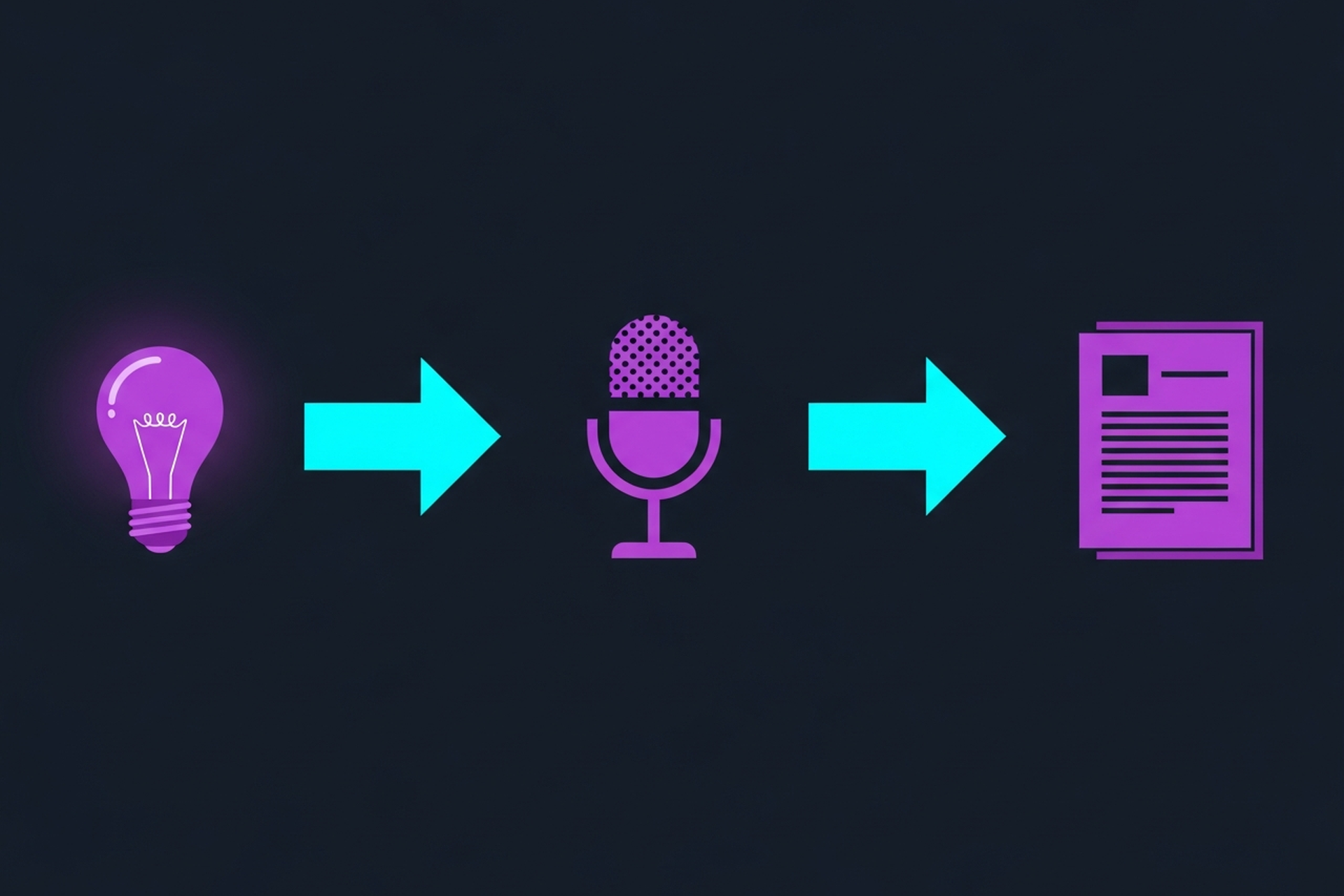
Transcription is the conversion layer between audio and every text-based content asset downstream:
A clean, accurate transcript at the top of this workflow multiplies the value of everything downstream. A poor-quality transcript that requires heavy correction adds time at every subsequent step.
For more on how transcription connects to content creation and distribution, see the podcast repurposing workflow guide.
Match the tool to your actual workflow:
| Scenario | Recommended Tool |
|---|---|
| Editing and transcription in one workflow | Descript |
| Remote interviews, want automatic transcription | Riverside |
| Meeting and interview transcription, Zoom integration | Otter.ai |
| High accuracy, technical tolerance, no usage limits | Whisper |
| Custom pipeline or API integration | AssemblyAI |
| Budget-constrained, low volume | Otter.ai free tier or Whisper |
For many B2B podcast teams, AI transcription is not the constraint. The constraint is what happens after the transcript exists: who reviews it, who writes the show notes, who identifies the clips, who publishes the content.
AI transcription solves a 5-minute problem. The remaining repurposing workflow, from review to published content, takes hours. Addressing transcription without addressing the broader workflow creates a narrower bottleneck, not a solved problem.
Podsicle Media handles the full workflow: recording, editing, transcription, review, show notes, and clip creation. Every episode ships as a finished content package. If you want to understand what that looks like for your team, schedule a call and we will walk through the details.